
In every election, political parties raise environmental protection issues. However, after reaching power, they protect and encourage activities against the environment that contradict the very issues they raised. Challenges in environmental conservation are evident because, on one hand, parties raise weak environmental issues to begin with, and on the other, they limit those issues to mere election slogans.
Last year, during the peak monsoon months of June and July, eight districts of Madhesh Province – Parsa, Bara, Rautahat, Sarlahi, Mahottari, Dhanusha, Siraha and Saptari – suffered from a severe drought. After a month without rain, hand pumps ran dry, causing a drinking water crisis in Madhesh.
Farmers, who lacked even drinking water, could not plant rice during the crucial month of June. Amidst this growing water crisis, then-Prime Minister KP Sharma Oli monitored the affected districts by helicopter on July 24 and announced the immediate installation of 500 deep tube wells.
However, environmentalists objected, stating that the Prime Minister’s announcement would lead to groundwater depletion and have a long-term negative impact on the water ecosystem, so the announcement was not implemented.
The problem in the Terai-Madhesh is not just a lack of surface water but also the gradual depletion of underground water. A study by Rakesh Sah, head of the Forest and Environment Division of Birgunj Metropolitan City, has already confirmed that the groundwater level is receding in various locations of Birgunj. Rakesh mentions that in Ward No. 10 of Birgunj Metropolitan City, a hand pump that reached water at 20 feet in 2022 dropped to 30 feet the following year. By 2024, that same pump had reached 35 feet. According to him, these statistics indicate that groundwater is depleting at a rapid pace. He says, “Additional boring in areas with a receding water table is not a long-term solution.”
Due to the depleting groundwater, Bihar, India – just across from Birgunj – has been strictly regulating uncontrolled groundwater extraction for two decades. The Bihar Groundwater (Regulation and Control of Development and Management) Act, 2006, mandates a fine of 10,000 rupees or up to six months in prison for arbitrary boring or drilling without government notification. While India enforces such strictness right across the border, the proposal for deep boring brought by then-Prime Minister KP Sharma Oli on this side of the border appears to lack prior study.
Environmental issues raised by political parties and candidates during elections are weak, not only in leaders’ speeches and project proposals but also in practice. Even when they put forward some good plans, there is no basis for implementing them. Once in power, they protect and encourage activities that lead to environmental destruction, contradicting the very issues they previously raised.
Challenges in environmental conservation are evident because parties initially raise flimsy environmental issues and then limit even those to mere election slogans. Similar to past elections, parties have released manifestos for the upcoming elections scheduled for March 5. Although they have put forward old plans for environmental protection, there is no foundation for their implementation.
The Nepali Congress has mentioned in its manifesto that it will completely prevent pollution, protect natural heritage, ensure Environmental Impact Assessments and Initial Environmental Examinations, promote environment-friendly agriculture, and take initiatives to become a net-zero nation by 2045.
The party has also raised issues such as the results-oriented mobilization of the Green Climate Fund, strengthening climate governance across all three levels of government, developing early warning systems, and mobilizing national and international resources for watershed conservation.
Prioritizing the plan for integrated settlement development, which has largely failed in previous years, the Nepali Congress has stated it will conduct disaster risk assessments and develop safe integrated settlements.
Similarly, the CPN (UML) has declared that it will protect watershed areas – including water sources, lakes, rivers and wetlands – secure available climate finance for adaptation, and preserve ecosystem services such as biodiversity, water resources, soil fertility, food production, local climate and forests.
The UML manifesto also mentions addressing the multidimensional vulnerabilities, risks and damages caused by climate change, leading the protection and promotion of Himalayan climate, and raising a strong voice in the interest of mountainous countries. It further states that Nepal will represent vulnerable nations in international forums to ensure justice-based compensation from major greenhouse gas-emitting nations.
The Nepal Communist Party (NCP), like other parties, has stated in its manifesto that it will ensure the rational use of land, water, forests and minerals, and establish a National Agricultural Disaster Fund to protect against risks like floods, droughts, hail and epidemics. It has raised issues ranging from conducting regular agricultural censuses and creating digital farmer databases to providing agricultural subsidies and achieving Nepal’s goal of net-zero emissions by 2045.
The NCP has also written in its manifesto that the construction of the Nijgadh International Airport, a project halted by the Supreme Court on the grounds that it would destroy natural resources, will be completed within five years.
The Supreme Court, following a hearing on May 26, 2022, regarding a writ filed on September 10, 2019, ordered the halt of the Nijgadh International Airport construction and the search for an alternative, noting that serious questions had been raised even during the preliminary Environmental Impact Assessment. Environmental activists had claimed that building the airport would require cutting 26 million trees, destroying wildlife habitats, increasing human-wildlife conflict and disrupting the ecological balance.
Ignoring the Supreme Court’s order and the demands of conservationists, the NCP included the Nijgadh airport in its manifesto. Environmental lawyer Padam Bahadur Shrestha says this clearly shows that the parties’ environmental protection issues in their manifestos are merely election slogans. “It is an old habit of the parties to use flowery language about environmental protection in their manifestos while protecting and promoting projects that work against it in practice,” he says.
The environmental agenda of the Rastriya Swatantra Party (RSP), which claims to be a new party, is no different from the others. The RSP has declared that within five years, it will reduce production costs through irrigation and technology, contribute effectively to climate adaptation development, and review laws and policies regarding forest management and utility so that forest areas and their products contribute significantly to the economy.
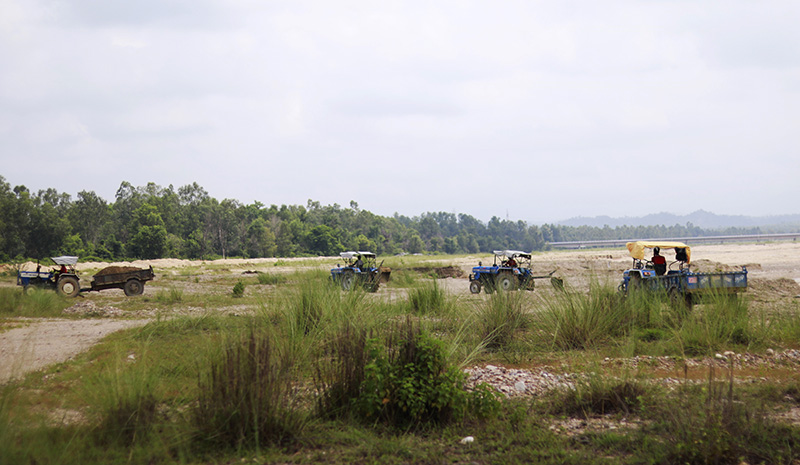
The RSP's manifesto mentions developing early warning and prevention structures, giving high priority to the Chure region, stopping the uncontrolled exploitation of Chure’s stones, gravel and sand, and monitoring forest protection through drone and satellite technology. While claiming they will do all this, none of the parties have put forward a concrete plan on how to execute it, what specific policies to create, or how to complete these tasks.
Almost all parties have included issues ranging from providing drinking water to environment-friendly development in their manifestos both in the past and present, even though these rights are already guaranteed by the 2015 Constitution.
The parties’ manifestos include commitments to protect the environment by stopping the dumping of sewage into rivers, conserving forests and ending haphazard deforestation. However, these issues are never raised in Parliament except during natural disasters. “They raise minor issues in Parliament claiming to mitigate climate change but even that is often motivated by the desire to participate in foreign programs,” says climate expert Dharmaraj Upreti.
Environmental promises limited to manifestos
In its 2017 local election manifesto, the Nepali Congress stated it would immediately install new technology to reduce pollution from factories in major urban areas, including the Kathmandu Valley. It promised to make important rivers, streams and lakes pollution-free and to control the use of plastic bags.
In the manifesto for the House of Representatives and Provincial Assembly elections that same year, the party claimed it would stop the arbitrary exploitation of rivers and streams, and create separate laws for the protection and management of the Chure region.
Despite failing to implement its 2017 election promises, the Congress introduced the slogan “One Ward, One Open Space” in its 2022 local election manifesto. It also made the ambitious announcement that pollution monitoring stations would be established in all local levels.
In that same 2022 local election, the Congress again promised relief and livelihood support programs targeting local farmers affected by floods, landslides, inundation and droughts. For the federal election later that year, it pledged to develop sustainable and climate-friendly agriculture. While the Congress promised to create a green and adaptive agricultural economy, it should have initiated the creation of agricultural laws before making such a declaration. “To this day, there is no agricultural law in Nepal. If there were a law, new technologies and technicians could be utilized alongside climate-friendly agriculture by introducing regulations and programs,” says crop development expert Dol Raj Pandey.
In its 2022 local election manifesto, the Congress pledged to regulate and control the uncontrolled exploitation of river and mineral resources. However, Sunil Khanal, the Ward Chairperson of Waling Municipality-10 in Syangja who ran for election based on that manifesto, acted contrary to his party’s commitment. He assaulted conservationists Megh Ale and Dinkar Nepal, who were protesting the haphazard river excavation taking place in the Aadhi Khola.
Dinkar stated that when they requested information on whether an Environmental Impact Assessment (EIA) had been conducted before the river excavation, the municipality refused to provide it. When they raised their voices about the issue, Ward Chairperson Sunil struck him with a metal rod, breaking his arm in three places and fracturing his head. Dinkar filed a case in the Syangja District Court against three individuals, including the involved Ward Chairperson Sunil. Sunil has been released on bail, while the court’s verdict is still pending.
In the 2022 House of Representatives election manifesto, the party also promised to establish a Climate Change Research Center and develop early warning systems in all necessary locations.
However, these promises also remained confined to the election manifesto. Even when the Congress led both the federal and provincial governments, the implementation of these manifesto pledges did not occur. In local levels where the Congress won the elections, no strictness was enforced regarding the use of plastic bags.
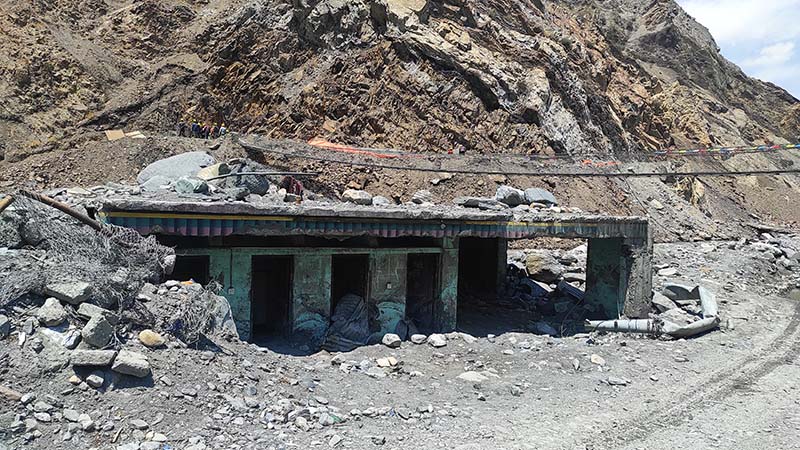
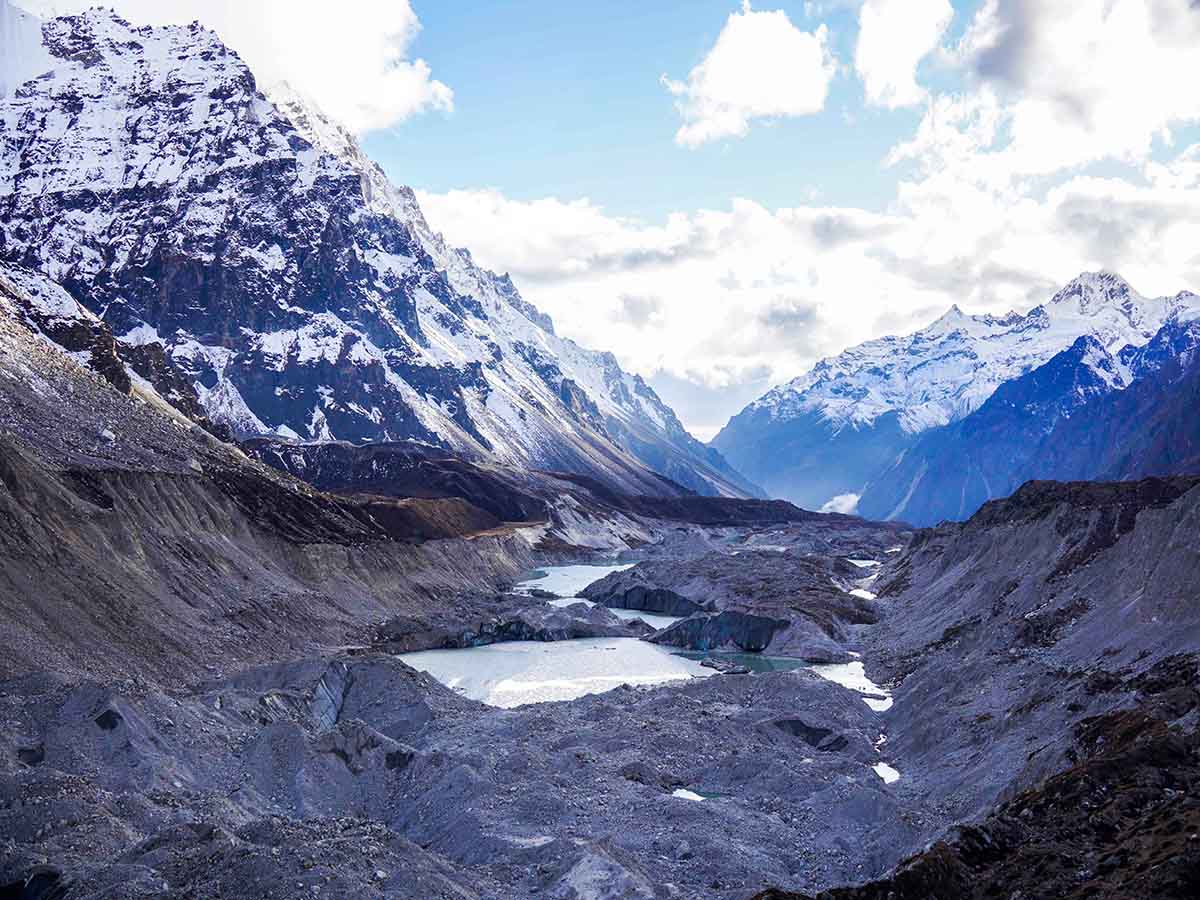
Nepal has neither a dedicated Climate Change Research Center nor a system for early warning in high-risk areas. Here, there isn’t even an early warning system in the Himalayan districts that are on the danger list for glacial lake outburst floods (GLOFs).
Congress leader Kalyan Gurung explains that the failure to implement the manifesto stems from the reality that a single party or leader cannot act alone. “It is saddening that we are unable to fulfill the commitments we made ourselves,” he says. “It turns out one party or leader isn’t enough. The support of all parties is required. Therefore, I have suggested to the party that we should only raise issues we are actually capable of fulfilling.”
In its manifestos from the 2017 local elections to the House of Representatives, the CPN (UML) also raised issues such as completely banning the use of materials that adversely affect the environment, providing electric stoves to every household, ensuring smoke-free homes, and placing a total ban on industries that cause environmental destruction.
They also gave assurances ranging from making Nepal a carbon-neutral country to implementing ‘one settlement, one pond’ and developing information systems to protect farmers from the adverse effects of climate change. However, environment and climate expert Dharmaraj Upreti alleges that none of these tasks were completed, nor was any initiative taken to do so. “They think, ‘Why choose small topics for the election? Let’s raise big issues’,” he says. “It’s an old habit of leaders to come up with various excuses when it’s actually time to work.”
CPN (UML) Central Committee member Bharati Pathak argues that fulfilling the environmental issues declared during elections takes time. “Even if a plan is made for five years in the manifesto, good projects take time to complete,” she said. “The lack of progress is also due to the trend where, as soon as a government falls, the succeeding party refuses to take ownership of the issues raised by the previous one.”
Although Bharati cites the lack of a majority government and frequent changes in power as reasons, CPN-UML Chairman KP Sharma Oli has served as Prime Minister the most – four times – between 2013 and 2023.
It was the Oli-led government that granted permission to a private company on December 31, 2018, to build a cable car in Pathibhara, Taplejung. Local residents protested, stating that constructing a cable car in Pathibhara, which Kirat communities worship as Mukkumlung, would lead to cultural and environmental impacts. “Since businessman Chandra Prasad Dhakal, who is close to the UML, was building this cable car, UML leaders insisted on its construction,” says advocate Prem Chandra Rai, who argued in favor of a writ filed by locals to halt the project. “Under the UML government, a cable car intended for private sector profit was included as a national priority project.”
The CPN-UML also stated in its 2022 election manifesto that it would produce 15,000 megawatts of electricity. However, there is no mention of where it will be produced, where it will be sold or how it will be operated.
The then-CPN (Maoist Center) (now Nepal Communist Party-NCP) has also been raising environmental issues since 2017. The NCP has consistently put forward plans to mobilize national and international resources and technology to protect the ecosystems of mountains, glacial lakes and hills; to operate at least 500 electric buses in the Kathmandu Valley; to launch electric transport from municipalities to all major cities; and to protect the Chure region. In the meantime, even when the party’s leader, Pushpa Kamal Dahal ‘Prachanda’, served as Prime Minister, the manifesto was not implemented.
Popular Gentle, who served as a development management expert when Prachanda was Prime Minister, says that the problem lies in the parties’ lack of clarity regarding manifesto implementation. He says, “When parties raise environmental issues, they need to prepare their manifestos with clarity on what to do to fulfill them, what programs to introduce, how they will be completed, and whether they need to work on policies, programs or laws.”
In its manifesto before the 2022 House of Representatives election, the then-Maoist Center wrote that it would sell forest products abroad. However, it failed to realize that policy programs or separate laws are required before selling forest products to foreign countries. Environmental law advocate Padam Bahadur Shrestha says, “There is no study of environmental subjects even when drafting manifestos. Furthermore, the Maoists supposedly claimed they would place an environmental officer in every municipality, even though this was already a provision mandated by the Constitution itself.”
The RSP, which contested the House of Representatives elections for the first time in 2022, promised in its manifesto to provide alternatives to plastic, build an international-level climate research center, increase investment in solar and wind energy, and establish one organic fertilizer factory per municipality. However, its environmental issues remained limited to the manifesto. RSP General Secretary Kabindra Burlakoti states that they were unable to implement the manifesto because they did not have the opportunity to serve in the government for a long period.
In the meantime, laws such as the Forest Act, Environment Protection Act, Pesticide Standards for Vegetables and Fruits, and the Food Hygiene and Quality Act have been formulated and amended. However, these laws and regulations have not been enforced. Environmental lawyer Padam Bahadur Shrestha says, “Parties have failed to implement good environmental laws or to make the public understand them.”
Parties do not include clear plans on how the environmental issues mentioned in their manifestos will be implemented. Although they claim they will perform various tasks, such as protecting the environment, forests and water, stopping illegal excavation, and banning plastic, the parties have not disclosed how these tasks will be carried out in this year’s manifesto, just as they failed to do in the past.
What is the missing issue?
Rising global temperatures have increased incidents of glacier melting, glacial lake outbursts, droughts, wildfires and unseasonal rainfall. The disruption of the water cycle has caused water sources to dry up, leading to a growing drinking water crisis worldwide and Nepal will not remain untouched by this crisis. Experts are warning that climate-related events will escalate further as the possibility of global warming exceeding 1.5°C looms.
There are over 6,000 rivers and streams in Nepal. A clear study must be conducted to determine which of these are suitable for electricity generation. This would stop the haphazard construction of hydroelectric projects. Disasters are increasing because of the failure to balance development with the environment. Therefore, environmental researcher Popular Gentle states that the current need is to implement sustainable development plans while preserving natural resources.
He mentions that his research found that over 70% of roads built with Nepal government investment in Gandaki and Lumbini provinces in recent years did not undergo an Environmental Impact Assessment (EIA). EIAs are often bypassed because they are perceived as time-consuming and prone to various interruptions. Consequently, Popular Gentle suggests amending the Environment Protection Act to first set a specific timeframe for EIAs and then establish rules to penalize those who fail to complete them within that period.
Another issue that parties must implement immediately is an early warning system. Receiving disaster information on time can reduce the loss of life and property. “Therefore, parties must prepare not just to say ‘steps will be taken to stop climate change’, but to define exactly what work will be done in sectors like agriculture, forestry, water, hydropower, energy and green employment,” suggested Popular Gentle.
Nepali Congress leader Kalyan Gurung states that there must be monitoring of the implementation of laws and programs introduced by the government for the benefit of the environment. Announcements such as the ban on the production and distribution of plastic thinner than 40 microns, the ongoing campaign to keep the Bagmati River clean, and the implementation of the Nepal Climate Model Program in 43 local levels have not been put into practice.
Parties and the government must be ruthless when it comes to nature conservation. There is a water shortage in the Terai-Madhesh. To find a long-term solution, deep boring in the Terai should be stopped and this issue ought to be included in the parties’ manifestos. Instead of groundwater, parties should provide plans for irrigation using surface water. However, Kalyan notes that weaknesses are visible in all parties, both old and new.
Other countries prepare reports based on scientific studies of loss and damage, whether to submit details for climate finance or to provide evidence for adaptation plans. However, climate expert Dharmaraj expresses concern over Nepal’s inability to do this. “To bring international finance into Nepal for the climate-related events we have faced and the resulting loss and damage, there is a need for a national-level expert team and policymakers to implement national adaptation plans and commitment letters,” he says. “But the parties haven’t raised such profound issues at all.”
Another issue the parties have missed is the conflict of interest in legal amendments. The Public Procurement Regulations, formed under the Public Procurement Act, 2006, were amended 13 times in 16 years. Through the seventh amendment on June 6, 2019, a provision was made to allow construction companies facing cases filed by the Commission for the Investigation of Abuse of Authority (CIAA) to participate in government contracts. This is viewed as an example of legal changes tailored to favor contractors and businesspeople.
According to former National Assembly member Ram Narayan Bidari, the direct involvement and opaque practices of the Office of the Prime Minister and Council of Ministers in the regulation amendment process show that businesspeople’s profit was prioritized over public interest. “There must be an impartial investigation into such matters. This is exactly what happens when contractors and construction businesspeople become members of parliament,” he said.
In collaboration with Report for the World. Please adhere to our republishing policy if you'd like to republish this story. You can find the guidelines here.

Comments